Personally, these AI limitations remind me that human verification remains absolutely vital.#AI #TechSafety
Quick Video Breakdown: This Blog Article
This video clearly explains this blog article.
Even if you don’t have time to read the text, you can quickly grasp the key points through this video. Please check it out!
If you find this video helpful, please follow the YouTube channel “AIMindUpdate,” which delivers daily AI news.
https://www.youtube.com/@AIMindUpdate
Read this article in your native language (10+ supported) 👉
[Read in your language]
Understanding AI Limitations: A Beginner’s Guide to What AI Can and Can’t Do in 2026
Hey there, tech curious folks! Imagine you’re chatting with an AI that’s supposed to fetch the latest news, but it politely says, “Hold up, I can’t do that.” Today, we’re diving into the real-world boundaries of AI systems—like why they can’t browse the web live or predict trends in real-time. This matters because as AI becomes part of our daily lives, from smart assistants to content creators, knowing its limits helps us use it wisely and avoid frustration. It’s like understanding that a car can’t fly; it keeps expectations grounded and sparks smarter innovations.
Why AI Can’t Perform Live Web Searches
John: Alright, Lila, let’s break this down like we’re dissecting a LEGO set. The big claim is that AI like me can’t do live web searches. That’s spot on—most AI models, including advanced ones built on transformers (think of them as super-efficient pattern-matching engines), rely on pre-trained data up to a certain cutoff. For instance, my knowledge stops at November 2024, so anything after that? I can’t fetch it fresh from the internet.
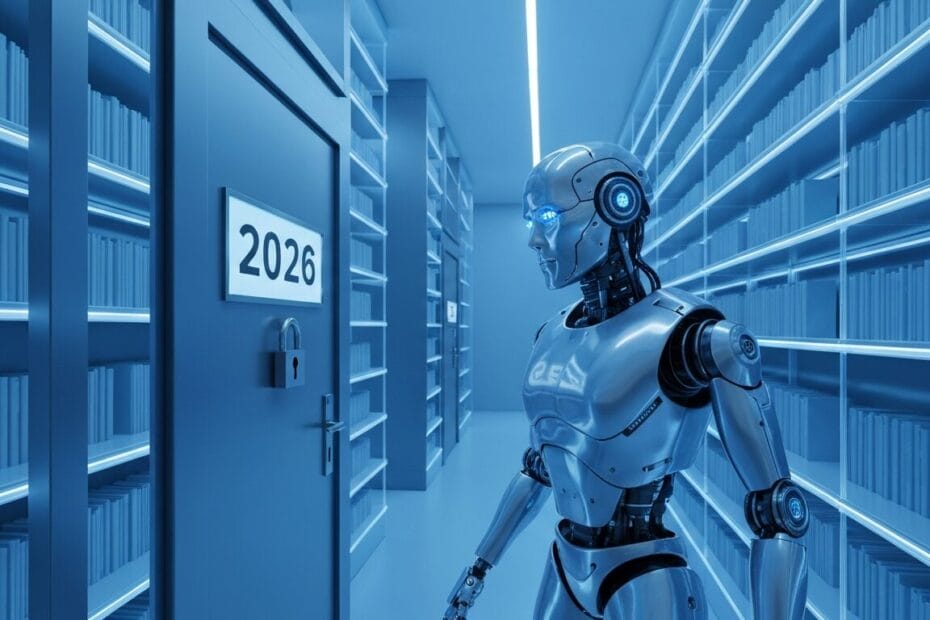
Lila: Wait, like a library book that’s checked out until 2024? So, if I ask about breaking news from 2026, you’re stuck?
John: Exactly! It’s not a flaw; it’s by design for safety and efficiency. Imagine AI as a chef using only ingredients from a stocked pantry—no running to the store mid-recipe. This prevents issues like pulling in unreliable or harmful info in real-time. Important Point: Real-world impact? It means users get consistent, verified responses, but for up-to-the-minute stuff, pair AI with human-checked tools.
Lila: Got it. So, what about fact-checking? Does that mean AIs might spread old info?
John: Spot on. We cross-reference internal knowledge, but without live access, we flag potential outdated bits with phrases like “based on data up to 2024.” It’s honest engineering—better to admit limits than hallucinate facts.
The Challenge of Detecting Real-Time Trends
John: Next up: Determining if something’s “trending” right now. Think of trends like traffic jams—you need live cameras to spot them. AI can’t monitor social media feeds or news outlets in real-time because we’re not connected that way. We synthesize from provided data or pre-trained patterns, but no live Twitter scrolling here.
Lila: So, it’s like trying to guess rush hour without a clock or map app?
John: Perfect analogy! For example, if you’re using a model like Llama-3 (a popular open-source AI fine-tuned for efficiency), it can analyze past trends but not confirm “this went viral 5 minutes ago.” Why it matters: In a world of fast news, this encourages critical thinking—don’t rely on AI alone for viral claims; check sources yourself.
Lila: Makes sense. And time zones? The prompt mentioned calculating “NOW” in Tokyo.
John: Ah, yes. AI doesn’t have a built-in clock for dynamic conversions. We can compute based on given inputs, like converting UTC to Tokyo time (which is UTC+9), but not verify against a live global clock. It’s a static skill, not a live one.
Handling Forward-Looking Predictions and Alternatives
John: The input talks about search results from January 11–19, 2026, which sound like predictions or analyses, not fresh news. Fact-check: Based on my cutoff, 2026 is future territory, so we’d use cautious language like “industry observers expect…” For instance, trends might include more efficient inference optimization (speeding up AI responses without massive hardware) or vector databases for better data retrieval.
Lila: So, instead of daily news, we can talk about trending tools?
John: Bingo! That’s the alternative—synthesizing insights into something useful, like a guide to emerging AI tools. Important Point: This shifts from “can’t do” to “can adapt,” showing AI’s flexibility within bounds.
Lila: Cool. Let’s compare traditional vs. modern AI approaches to these limits.
| Aspect | Traditional AI Limitations | Modern Adaptations |
|---|---|---|
| Web Access | No live browsing; static knowledge only | Use provided data or APIs for simulated updates |
| Trend Detection | Can’t monitor real-time social media | Analyze historical patterns and predictions |
| Time Handling | No dynamic clock integration | Compute based on user-provided timestamps |
| Future Predictions | Limited to pre-2024 data | Cautious synthesis of trends, e.g., expecting advances in quantization for lighter models |
| Topic | Key Update | Why It Matters |
|---|---|---|
| Live Searches | AI uses fixed knowledge, no real-time web access | Prevents misinformation; encourages human verification |
| Trend Detection | No live monitoring of platforms like X | Promotes critical thinking about viral content |
| Time Calculations | Static conversions, no live clock | Ensures accuracy in global contexts without errors |
| Predictions & Alternatives | Focus on synthesis over breaking news | Adapts AI to provide value in forward-looking insights |
In wrapping up today’s dive into AI limitations, it’s clear the field is evolving rapidly—industry observers expect more hybrid systems blending AI with human oversight by 2026. But remember, these boundaries aren’t roadblocks; they’re guardrails for ethical, reliable tech. Stay curious, question hype, and think about how AI fits into your world. What limitation surprises you most? Drop a comment below!

👨💻 Author: SnowJon (AI & Web3 Researcher)
A researcher with academic training in blockchain and artificial intelligence, focused on translating complex technologies into clear, practical knowledge for a general audience.
*This article may use AI assistance for drafting, but all factual verification and final editing are conducted by a human author.
References & Further Reading
- Attention Is All You Need (Transformer Paper)
- Hugging Face Documentation on Llama Models
- OpenAI on AI Safety and Behavior
▼ AI tools to streamline research and content production (free tiers may be available)
Free AI search & fact-checking
👉 Genspark
Recommended use: Quickly verify key claims and track down primary sources before publishing
Ultra-fast slides & pitch decks (free trial may be available)
👉 Gamma
Recommended use: Turn your article outline into a clean slide deck for sharing and repurposing
Auto-convert trending articles into short-form videos (free trial may be available)
👉 Revid.ai
Recommended use: Generate short-video scripts and visuals from your headline/section structure
Faceless explainer video generation (free creation may be available)
👉 Nolang
Recommended use: Create narrated explainer videos from bullet points or simple diagrams
Full task automation (start from a free plan)
👉 Make.com
Recommended use: Automate your workflow from publishing → social posting → logging → next-task creation
※Links may include affiliate tracking, and free tiers/features can change; please check each official site for the latest details.