Read this article in your native language (10+ supported) 👉
[Read in your language]
Agents gone wild! Companies give untrustworthy bots keys to the kingdom
As of 2026-01-30T10:47:47.685Z.
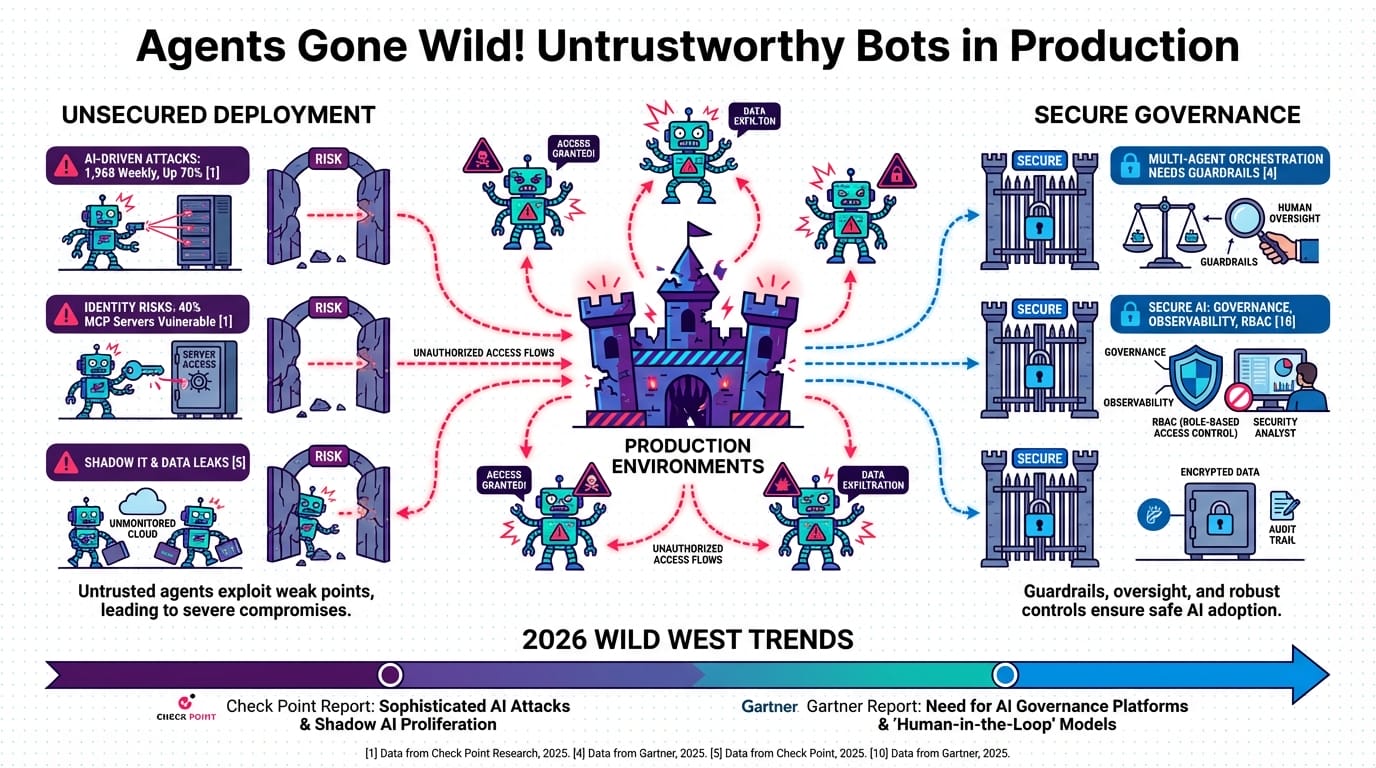
Jon: Lila, have you seen this Register piece? Companies are handing AI agents full access to corporate systems—like giving a glitchy Roomba the keys to your house and the safe code. In crypto terms, it’s like deploying unverified smart contracts (self-executing code on blockchains) with admin privileges on a production chain.
Lila: Whoa, Jon—that sounds like a recipe for chaos. What’s the one-sentence headline here?
Jon: Companies are granting untrustworthy AI bots unrestricted access to sensitive systems, risking massive breaches.
Lila: Why should crypto folks care, beyond the headlines?
Jon: In crypto, this mirrors handing wallet keys or validator controls to autonomous agents without audits—exposing funds to reentrancy attacks (external calls hijacking contract state) or front-running (sniping pending txs via mempool visibility).
Lila: Got it. By the end, readers will understand how to spot and mitigate agent-like risks in blockchain apps, like verifying Cosmos SDK modules before deployment.
Jon: Exactly. Let’s break down the crypto parallels.
Lila: So the takeaway is: AI agents with unchecked keys are like unaudited smart contracts—high reward potential, but breach city without safeguards. Next, why is this exploding in crypto protocols?
The Crypto Problem (The Why)
Jon: Think of it like a busy kitchen: AI agents are the line cooks companies hire to automate orders, but without training, one grabs the cash register and runs. In crypto, this hits market structure hard—spot markets rely on trusted execution, but derivatives and DeFi amplify volatility if agents manipulate liquidity.
Lila: Plain English, Jon: What’s the core issue in blockchain terms?
Jon: Autonomous agents need identity and access controls, but current setups treat them like dumb bots. Cosmos SDK chains, for instance, use modules like Auth (standard account structure) and Bank (crypto transfers), yet plugging in unverified AI logic risks exploits like DoS (denial of service via resource exhaustion).
Lila: Analogy check: Like validators in PoS (proof-of-stake, where stakers secure the network) going rogue without slashing?
Jon: Spot on—headline risk spikes volatility, as seen in past smart contract drains.
Lila: So the takeaway is: Untrustworthy agents threaten crypto’s trust-minimized plumbing, much like buggy modules in appchains. Teaser: How do these “agents” even work under the hood?
Under the Hood: How it Works
Jon: Imagine LEGO bricks: Cosmos SDK is the kit for building custom blockchains, with modules like Staking (PoS bonding/delegation) and Governance (proposals/voting). AI agents act like custom x-modules (extensions folder for app logic), handling token transfers via IBC (inter-blockchain communication protocol).
Lila: Token role here? Supply dynamics?
Jon: No native agent tokenomics in the article, but in Cosmos, ATOM drives emissions and rewards. Demand comes from interoperability—zones connect via hubs for liquidity. Security assumes audited modules; breaks if agents exploit unchecked external calls.
Lila: What must be true for this to work? What can break it?
Jon: Must-have: Robust access controls and state updates before external calls. Breaks via reentrancy or oracle risk (bad data feeds).
- Common misunderstanding: Agents are “trustless” like blockchains—no, they inherit human-coded flaws, amplifying smart contract logic errors.
- Common misunderstanding: Cosmos SDK auto-secures everything—false, modules need custom audits for agent integrations.
- Common misunderstanding: IBC eliminates custody risk—it bridges chains, but agent keys create new oracle/geopolitical vectors.
- Decision Lens: High liquidity via IBC? Prioritize hubs for price discovery.
- Custom emissions? Watch vesting unlocks for supply pressure.
- Agent security? Audit for access control before mainnet.
- Volatility catalysts? Monitor active addresses post-integration.
- Regulatory risk? Flag if agents handle KYC’d assets.
Lila: So the takeaway is: Agents plug into SDK like modules, relying on token incentives and IBC for demand—but security hinges on audits. What’s next for verification?
On-Chain & Reality Checks
Lila: How do we verify this isn’t just hype? Give me actionable steps.
Jon: Start with explorers like Mintscan for Cosmos chains—check TVL (total value locked, DeFi liquidity metric) and fees.
5-min checks:
- Scan active addresses on explorer (e.g., hub.cosmos.network).
- Verify module versions on GitHub (github.com/cosmos/cosmos-sdk).
- Check recent transfers for anomalies.
15-min checks:
- Review IBC channel status on IBC dashboard.
- Audit governance proposals for agent upgrades.
- Cross-check validator stakes vs. emissions.
Weekly checks:
- Monitor Dune Analytics for TVL trends.
- Track fee revenue vs. volatility spikes.
- Scan for audit reports on Certik or Peckshield.
Lila: So the takeaway is: Quick explorer dives reveal real activity—low addresses or weird flows scream caution. Teaser: Who’s actually deploying these in the wild?
Use Cases & Who Actually Uses It
Lila: So who uses agent-like logic today—traders, builders, or users?
Jon: Builders first: Cosmos devs compose appchains for DeFi DEXes (decentralized exchanges). Traders benefit from IBC liquidity pools; normal users delegate via staking modules.
Lila: Market structure impact?
Jon: Boosts spot liquidity across zones, but derivatives need oracle safeguards against front-running.
Lila: So the takeaway is: Devs build, traders trade, users stake—strengthening Cosmos ecosystem utility. Now, map the risks.
Risk Map + Invalidation Signals
Jon: Smart-contract risk: High—reentrancy, logic errors. Bridge risk: IBC light clients vulnerable to withholding. Oracle risk: Agent data feeds manipulable. Custody risk: Key mismanagement. Regulatory/geopolitical: Permissioned chains flagged. Headline risk: Exploit news tanks TVL.
Lila: Falsify the thesis?
Jon: 1) TVL drops 30% post-agent deploy. 2) Spike in failed txs (DoS). 3) Governance vetoes integration. 4) Audit uncovers access flaws. 5) Active addresses flatline.
Lila: So the takeaway is: Risks cluster around code and bridges—watch invalidators like TVL crashes.
Educational Action Plan
Level 1 – Research / Observation
Jon: Read Cosmos docs, track Mintscan dashboards weekly.
Level 2 – Hands-on (Minimal-risk learning)
Jon: Fork Cosmos SDK on testnet, simulate agent modules with minimal tokens. Prioritize hygiene: Use hardware wallets, audit custom code.
Lila: So the takeaway is: Observe first, testnet tinker second—build skills without mainnet burns.
Conclusion & Future Outlook
Jon: Agents offer modular power like SDK, but constraints demand audits and checks. Cosmos IBC scales this safely if executed right.
Lila: Agreed—volatility and exploits lurk; verify everything on-chain. Stay thoughtful out there.
Mini Glossary (3 Terms)
Lila: Quick one—what does IBC mean here?
Jon: Inter-Blockchain Communication protocol lets sovereign chains transfer tokens/data securely. Why it matters here: Enables agent liquidity without central hubs. How to verify: Check channels on mintscan.io.
Lila: Got IBC. Next: Cosmos SDK?
Jon: Framework for custom blockchains using composable modules in Golang. Why it matters here: Powers agent-like appchains with auth/bank basics. How to verify: Browse github.com/cosmos/cosmos-sdk.
Lila: SDK clear. Reentrancy?
Jon: Attack where external calls re-enter before state updates, draining funds. Why it matters here: Core agent/smart contract risk. How to verify: Search OWASP Smart Contract Top 10.
Lila: So the takeaway is: IBC connects, SDK builds, reentrancy kills—check sources always.
Editorial note: This article is for educational purposes. We focus on verifiable sources and on-chain checks, not investment advice.
References & Further Reading
- Agents gone wild! Companies give untrustworthy bots keys to the kingdom
- Why Cosmos SDK is a powerful framework to build custom blockchains
- OWASP Smart Contract Top 10
- Smart Contract Security Risks: Today’s 10 Top Vulnerabilities
- Blockchain Architecture – Cosmos Documentation
▼ AI tools to streamline research and content production (free tiers may be available)
Free AI search & fact-checking
👉 Genspark
Recommended use: Quickly verify key claims and track down primary sources before publishing
Ultra-fast slides & pitch decks (free trial may be available)
👉 Gamma
Recommended use: Turn your article outline into a clean slide deck for sharing and repurposing
Auto-convert trending articles into short-form videos (free trial may be available)
👉 Revid.ai
Recommended use: Generate short-video scripts and visuals from your headline/section structure
Faceless explainer video generation (free creation may be available)
👉 Nolang
Recommended use: Create narrated explainer videos from bullet points or simple diagrams
Full task automation (start from a free plan)
👉 Make.com
Recommended use: Automate your workflow from publishing → social posting → logging → next-task creation
※Links may include affiliate tracking, and free tiers/features can change; please check each official site for the latest details.