
Read this article in your native language (10+ supported) 👉
[Read in your language]
OpenAI launches Codex app as enterprises weigh autonomous AI coding tools
As of 2026-02-05T03:57:57.132Z.
Jon: Hey Lila, OpenAI just launched the Codex app—a standalone tool for autonomous AI coding aimed at enterprises. It’s like handing developers a super-smart intern that writes code on demand.
Lila: Interesting, but why does this matter in crypto terms? We’re talking blockchain here, not just fancy AI.
Jon: Fair point. In crypto, this could turbocharge smart contract development on frameworks like Cosmos SDK (modular toolkit for building custom blockchains), where devs compose PoS (proof-of-stake consensus where stakers secure the network) chains faster. Readers should care because it lowers barriers to auditing and deploying secure dApps, but amps up risks if AI hallucinates vulnerabilities.
Lila: Got it—so AI coding tools promise speed for crypto builders. By the end, we’ll understand how to verify if they’re producing secure Cosmos-style code.
Lila: So the takeaway is: Codex hits crypto by accelerating appchain builds, but security stays human-first. What’s next on the crypto angle?
The Crypto Problem (The Why)
Jon: The core issue in crypto is building secure, custom blockchains without starting from scratch—like Cosmos SDK lets you do with Tendermint (Byzantine Fault Tolerant consensus engine for PoS chains). AI like Codex could automate module composition, but one buggy smart contract and it’s game over, as we’ve seen with billions lost to exploits.
Lila: Plain English: Devs waste time on boilerplate, and errors in state machines (deterministic code updating blockchain data) cause hacks. What’s the analogy?
Jon: Think of it like a factory assembly line: Cosmos SDK provides pre-built parts (auth, bank, staking modules), but AI might slap them together wrong, leading to a jammed line or exploding widget.
Lila: So the takeaway is: Speed is great, but crypto demands bulletproof assembly. Tease me the mechanics next.
Under the Hood: How it Works
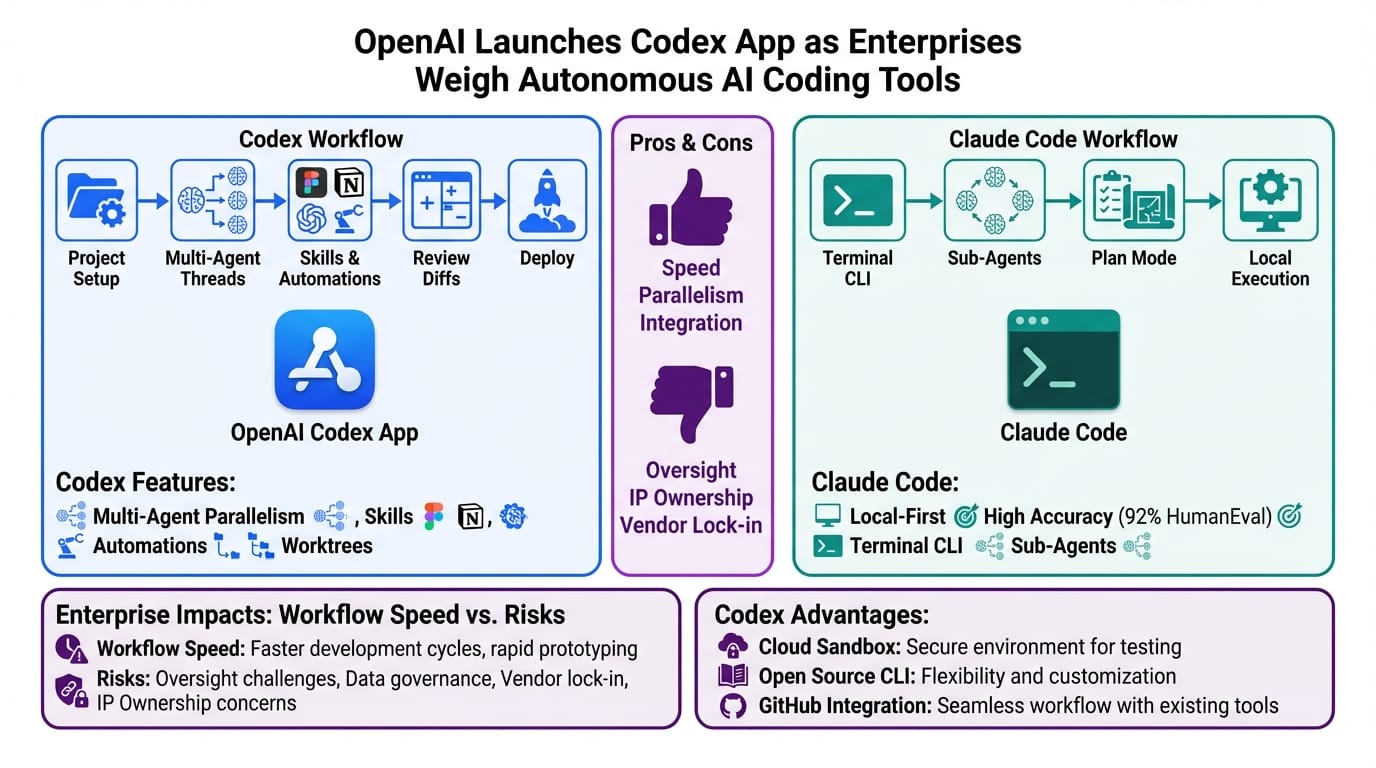
Jon: Imagine Codex generating Cosmos SDK code: It’d output Golang modules for BaseApp (core app template connecting to consensus), plugging in bank for token transfers or staking for PoS security. No native tokenomics here—ATOM (Cosmos Hub token for fees/staking) is ecosystem-level, with emissions via governance.
Lila: What must be true for AI-generated code to work securely? What can break it?
Jon: It needs deterministic state transitions via ABCI (interface between app and consensus layers), plus human audits for CEI pattern (checks-effects-interactions to avoid reentrancy). Breaks via overflows, unhandled edge cases, or skipping OpenZeppelin-like libraries.
- Common misunderstanding: AI code is “secure by default”—no, it hallucinates logic flaws like unchecked transfers.
- Common misunderstanding: Cosmos SDK auto-secures everything—modules are composable but need custom validation.
- Common misunderstanding: Faster coding means less risk—complexity still breeds exploits.
- Decision Lens: Prioritize modules with audits (e.g., staking) over AI inventions.
- Check emissions align with governance, not unchecked mints.
- Verify IBC (cross-chain protocol) hooks don’t expose bridges.
- Simplicity first: Fewer custom modules, lower attack surface.
- Test on testnets before mainnet sovereignty.
Lila: So the takeaway is: AI accelerates SDK composition, but security patterns like CEI are non-negotiable. How do we check on-chain?
On-Chain & Reality Checks
Lila: How do we verify AI-coded Cosmos chains aren’t just hype?
Jon: Start with explorers like Mintscan for ATOM flows, then dashboards for TVL (total value locked in DeFi) and active validators.
5-min checks:
- Scan explorer for recent tx volume and fee spikes.
- Check top validators’ stake distribution—no centralization.
15-min checks:
- Review governance proposals for unlocks or emissions.
- Query active addresses vs. transfers for real usage.
- Spot-check IBC transfers for liquidity flow.
Weekly checks:
- Monitor slashing events for validator misbehavior.
- Track TVL changes and fee revenue.
- Audit module upgrades via GitHub commits.
- Compare against Cosmos Hub benchmarks.
Lila: So the takeaway is: Quick explorer glances reveal health; deeper dives confirm activity. Who’s actually using this tech?
Use Cases & Who Actually Uses It
Lila: So who uses Cosmos SDK today—traders, builders, or users? How does AI fit?
Jon: Builders first: DeFi dApps on appchains like Osmosis for DEXes, using SDK for custom staking. Traders hit spot markets via IBC liquidity; AI speeds prototyping but pros audit for production.
Jon: Users interact via wallets with governance votes—low friction thanks to modules.
Lila: So the takeaway is: Devs/builders lead, enhancing market structure via interoperable chains. Now, risks?
Risk Map + Invalidation Signals
Jon: [Important Insight] Smart-contract risk: High—AI misses reentrancy; use CEI. Bridge risk: IBC solid but oracle-dependent. Custody: Sovereign validators mitigate. Regulatory: Governance evolves slowly. Headline risk: Hype fades fast.
Jon: Not applicable: Heavy derivatives volatility here—more spot/IBC focus.
Jon: Falsifiers: 1) Validator centralization >50% stake. 2) Zero IBC volume post-launch. 3) Repeated slashing spikes. 4) TVL drop despite emissions. 5) Failed governance votes on upgrades.
Lila: So the takeaway is: Layered risks demand vigilance; watch those signals closely.
Educational Action Plan
Jon: Level 1: Read Cosmos docs, observe Mintscan for Cosmos Hub.
Jon: Level 2: Hands-on—fork SDK examples on testnet, apply CEI manually. Use sandboxes for AI-generated code; emphasize audits, no mainnet spends.
Lila: So the takeaway is: Observe first, test safely—build skills without risk.
Conclusion & Future Outlook
Jon: Codex could make Cosmos SDK builds routine, boosting interoperability, but constraints like audit needs persist. Worth watching for dev productivity.
Lila: Agreed—volatility in adoption and tech risks remain; verify everything on-chain.
Mini Glossary (3 Terms)
Lila: Quick one—what does Cosmos SDK mean here?
Jon: Modular Golang framework for app-specific blockchains with pre-built modules like staking. Why it matters here: Enables quick, interoperable chains AI can prototype. How to verify: Check docs.cosmos.network and GitHub repos.
Lila: Got IBC?
Jon: Protocol letting Cosmos chains transfer tokens/data trustlessly. Why it matters here: Powers liquidity across AI-built appchains. How to verify: Mintscan.io IBC explorer.
Lila: CEI pattern?
Jon: Checks-effects-interactions order prevents reentrancy hacks. Why it matters here: Essential audit for AI code. How to verify: OpenZeppelin docs or Slither static analyzer.
Lila: So the takeaway is: Master these for secure crypto building—always verify sources.
Editorial note: This article is for educational purposes. We focus on verifiable sources and on-chain checks, not investment advice.
References & Further Reading
- OpenAI launches Codex app as enterprises weigh autonomous AI coding tools
- Why Cosmos SDK is a powerful framework to build custom blockchains
- Blockchain Architecture – Cosmos Documentation
- A Blockchain App Architecture – Developer Portal – Cosmos
- Best Practices for Smart Contract Security
▼ AI tools to streamline research and content production (free tiers may be available)
Free AI search & fact-checking
👉 Genspark
Recommended use: Quickly verify key claims and track down primary sources before publishing
Ultra-fast slides & pitch decks (free trial may be available)
👉 Gamma
Recommended use: Turn your article outline into a clean slide deck for sharing and repurposing
Auto-convert trending articles into short-form videos (free trial may be available)
👉 Revid.ai
Recommended use: Generate short-video scripts and visuals from your headline/section structure
Faceless explainer video generation (free creation may be available)
👉 Nolang
Recommended use: Create narrated explainer videos from bullet points or simple diagrams
Full task automation (start from a free plan)
👉 Make.com
Recommended use: Automate your workflow from publishing → social posting → logging → next-task creation
※Links may include affiliate tracking, and free tiers/features can change; please check each official site for the latest details.