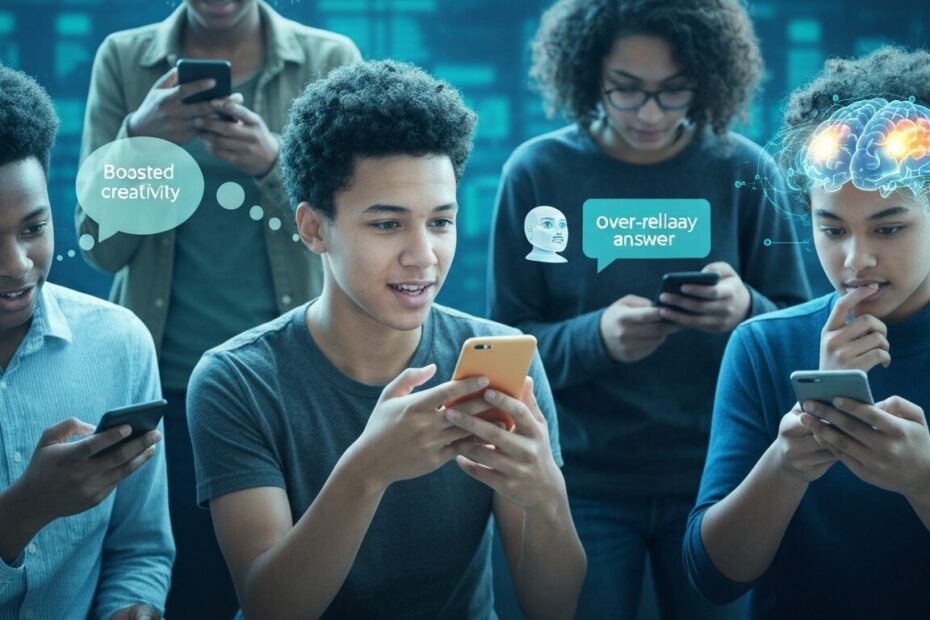
Are AI chatbots making US teens smarter or lazier? Explore how widespread AI use impacts critical thinking and mental health.#AITeens #AIChatbots #DigitalWellbeing
Quick Video Breakdown: This Blog Article
This video clearly explains this blog article.
Even if you don’t have time to read the text, you can quickly grasp the key points through this video. Please check it out!
If you find this video helpful, please follow the YouTube channel “AIMindUpdate,” which delivers daily AI news.
https://www.youtube.com/@AIMindUpdate
Read this article in your native language (10+ supported) 👉
[Read in your language]
US Teens and AI Chatbots: Love at First Chat, But Is It Rotting Their Brains?
🎯 Level: Beginner
👍 Recommended For: Parents concerned about tech’s impact on kids, Educators navigating digital learning, Teens curious about their own AI habits
Imagine this: It’s a typical Tuesday night, and your 15-year-old is glued to their phone, not scrolling TikTok, but chatting away with an AI buddy about everything from homework woes to heartbreak. Sounds familiar? Well, recent studies are shining a light on how US teens are diving headfirst into the world of AI chatbots, and it’s not all sunshine and rainbows. As John: a battle-hardened tech lead, I’m here to cut through the fluff and explore the real deal. Joining me is Lila: our pragmatic developer bridging the gap for beginners. Let’s unpack this trending topic together, starting with why it’s blowing up and what it means for young minds.
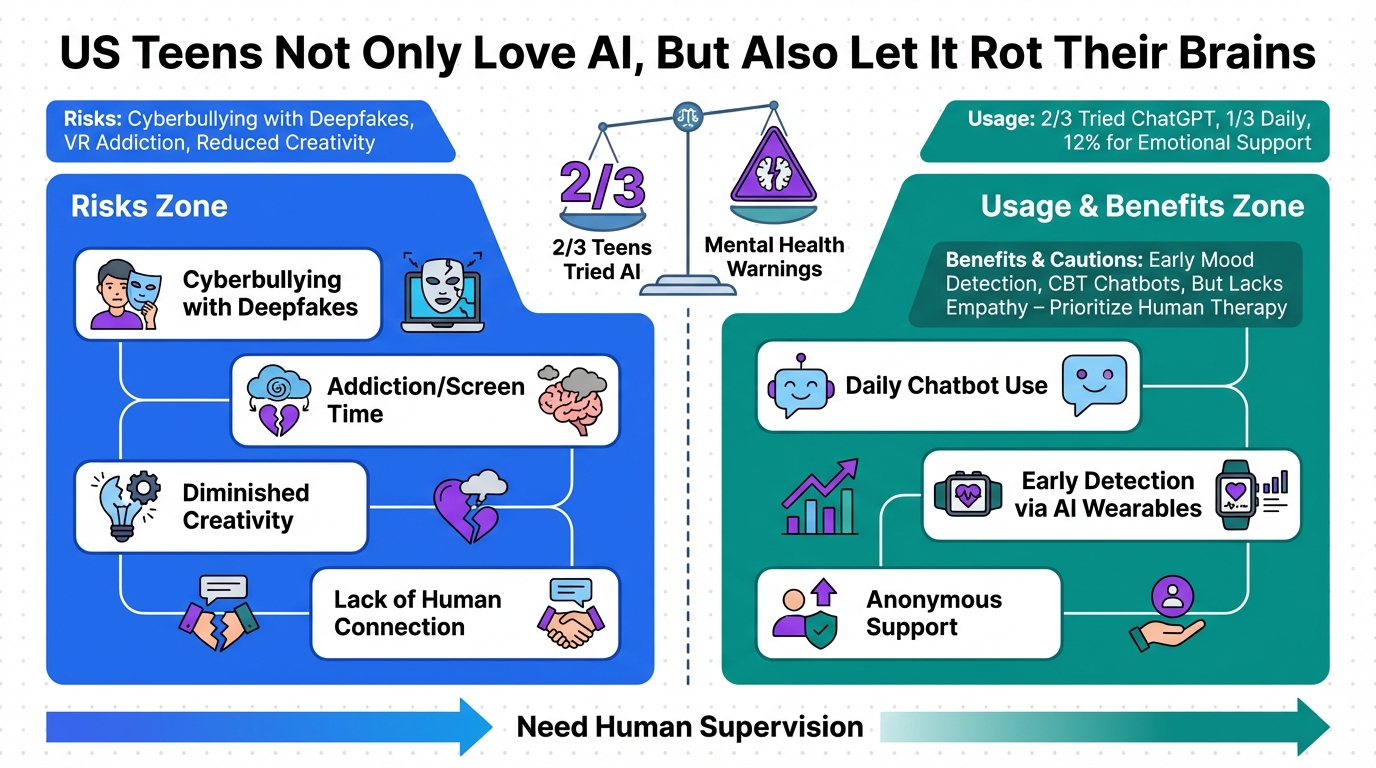
John: Alright, folks, the blog title from The Register—”US teens not only love AI, but also let it rot their brains”—is peak clickbait, roasting the hype around AI while nodding to some legit concerns. But let’s not throw the baby out with the bathwater. Recent Pew Research shows that about two-thirds of US teens use AI chatbots, with nearly a third chatting daily. ChatGPT is the fan favorite, but safety flags are waving high on mental health and education fronts.
Lila: Exactly, John. If you’re new to this, think of AI chatbots like that super-smart friend who’s always available—Genspark is a great example of a helpful tool for quick research without the overwhelm. But for teens, it’s becoming more than a tool; it’s a companion, and that’s where things get tricky.
Why the Buzz? Highlighting the Key Impacts
John: First off, let’s highlight the big wins and worries. On the positive side, AI can boost learning with instant answers, making education faster and more accessible. But the downsides? Studies link heavy use to weaker critical thinking and potential mental health risks, like addiction or exposure to iffy content. CNN and The Guardian reports echo this, noting how one in four teens turn to AI for emotional support amid long therapy waitlists.
Lila: And don’t forget the cost savings—free chatbots mean no pricey tutors. But as TechCrunch points out, relationships with these bots can turn addictive, rotting those brain muscles that need exercise through real problem-solving.
The “Before” State: Life Without AI Chatbots
John: Remember the old days? Teens hit the library for research, bugged parents for advice, or fumbled through homework with outdated textbooks. It built grit, sure, but it was slow and frustrating. Enter AI: now, with tools like Gamma for whipping up slides from chatbot insights, the game has changed. But is it making kids lazy thinkers?
Lila: Totally. Before, a history project meant hours of note-taking. Now, AI summarizes it in seconds, freeing time for creativity—or, critics say, mindless scrolling.
Core Mechanism: How AI Chatbots Work (Explained Like Your Favorite Recipe)
John: Let’s break it down without the jargon overload. At its core, an AI chatbot is like a master chef in your kitchen—trained on massive datasets (think billions of recipes) to whip up responses. Using models like fine-tuned Llama-3-8B from Hugging Face, it predicts what you want next, quantization shrinking it to run on your phone efficiently.
Lila: ELI5: Imagine a chatbot as a translator in your pocket, turning your messy questions into clear answers. It uses patterns from past chats (via libraries like LangChain) to respond, but without human empathy, it can miss red flags in mental health talks, as EdWeek research warns.
Use Cases: Real-World Scenarios for Teens and AI
John: Scenario 1: Homework Hero. A teen asks ChatGPT to explain algebra; it breaks it down step-by-step. But over-rely on it, and poof—critical thinking fades. Pair it with Nolang for interactive coding lessons to keep skills sharp.
Lila: Scenario 2: Mental Health Buddy. With waitlists long, teens vent to AI, as The Guardian notes. It’s accessible, but experts say it’s no substitute for pros—could even worsen issues if advice is off.
John: Scenario 3: Creative Spark. Turning ideas into videos? Use chatbot prompts with Revid.ai for marketing shorts. Great for education projects, but moderation is key to avoid brain rot.
| Aspect | Old Method (Pre-AI) | New Solution (AI Chatbots) |
|---|---|---|
| Speed of Learning | Slow, manual research | Instant answers |
| Mental Health Support | Limited to friends/family or long waits | 24/7 access, but risky advice |
| Critical Thinking Impact | Builds through effort | Can weaken if overused |
| Cost | Books, tutors expensive | Mostly free |
| ROI for Education | High effort, solid skills | Quick gains, but potential long-term loss |
Wrapping It Up: Balance the Love with Caution
Lila: So, teens love AI for good reason—it’s speedy, fun, and helpful. But to avoid the ‘brain rot,’ mix it with real-world learning. Parents, chat with your kids about usage; educators, integrate it wisely.
John: Spot on. Dive in responsibly—maybe automate routines with Make.com to free up brainpower for what matters. AI’s here to stay; let’s make it a force for good.

👨💻 Author: SnowJon (Web3 & AI Practitioner / Investor)
A researcher who leverages knowledge gained from the University of Tokyo Blockchain Innovation Program to share practical insights on Web3 and AI technologies. While working as a salaried professional, he operates 8 blog media outlets, 9 YouTube channels, and over 10 social media accounts, while actively investing in cryptocurrency and AI projects.
His motto is to translate complex technologies into forms that anyone can use, fusing academic knowledge with practical experience.
*This article utilizes AI for drafting and structuring, but all technical verification and final editing are performed by the human author.
🛑 Disclaimer
This article contains affiliate links. Tools mentioned are based on current information. Use at your own discretion.
▼ Recommended AI Tools