
Demystifying the Seven Coding Mysteries: Areas Even Pros Pretend to Understand
🎯 Level: Beginner / Intermediate
👍 Recommended For: Aspiring programmers, Tech hobbyists, Career switchers into software development
John: Hey folks, imagine you’re at a family gathering, and someone asks what you do for a living. You say, “I’m a developer,” and they nod like they get it. But deep down, even we coders have those dark corners of our craft that make us sweat. That’s exactly what the recent InfoWorld article “Seven coding domains no developer really understands” dives into – those tricky areas where most of us are just winging it. If you’re new to coding or just curious, tools like Genspark can help you research these topics quickly without getting lost in the weeds.
Lila: Totally relatable, John! Think of it like trying to bake a cake for the first time – you follow the recipe, but why does it sometimes flop? We’re here to break it down ELI5-style, so no one feels left out.
The Old Way: Fumbling Through Coding Mysteries
John: Before articles like this one from InfoWorld (published just a day ago, based on the latest web info), developers often dealt with these complex domains by trial and error or Stack Overflow marathons. You’d spend hours debugging concurrency issues, pretending you fully grasped why threads were clashing, all while your project deadlines loomed. It was inefficient, frustrating, and honestly, a bit of a guessing game.
Lila: Yeah, the “before” state was like navigating a maze blindfolded. Now, with modern resources and AI-assisted tools, we can shine a light on these areas. For creating quick docs or slides to map out your learnings, check out Gamma – it’s a game-changer for visualizing complex ideas without the hassle.
Core Mechanism: Unpacking the Mysteries with Everyday Metaphors
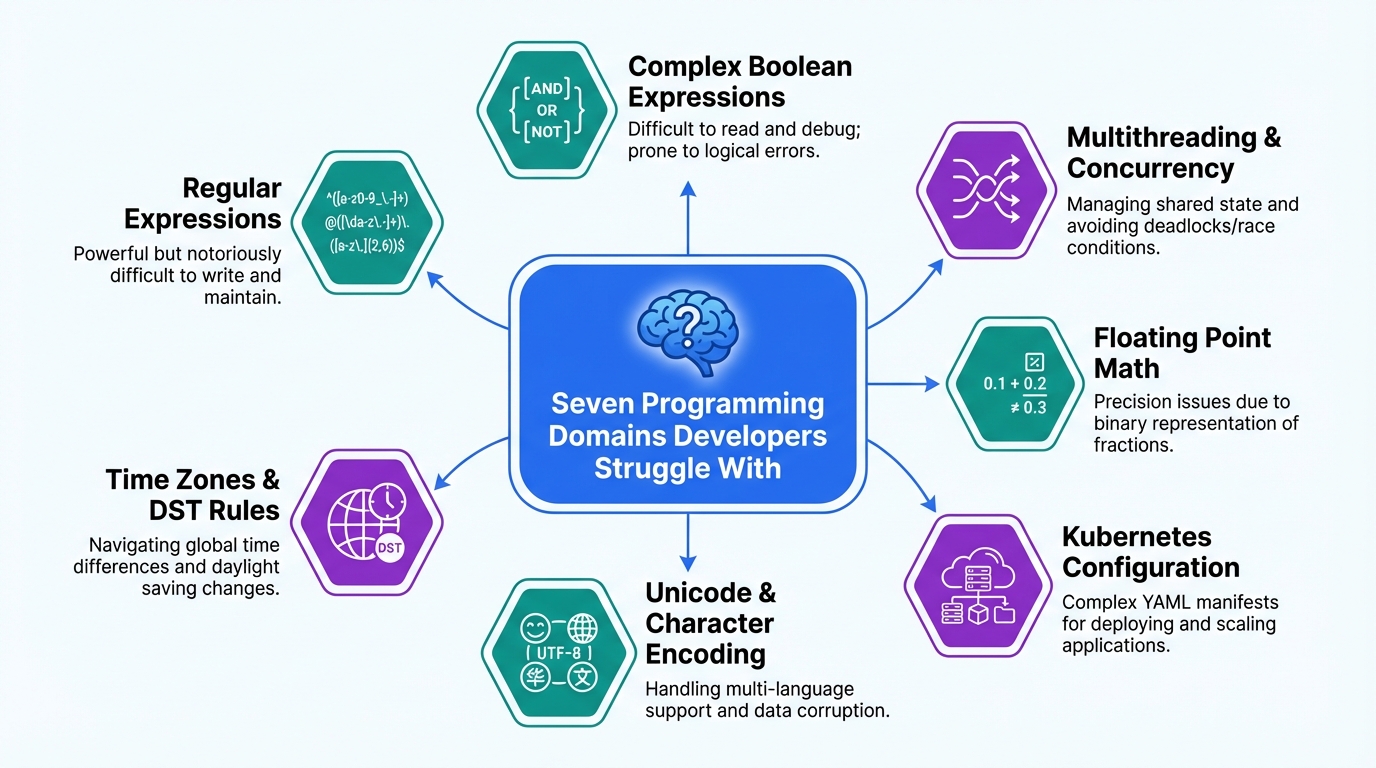
John: Alright, let’s get to the heart of it. The InfoWorld piece highlights seven coding domains that stump even seasoned devs: concurrency, floating-point arithmetic, time zones, security (especially cryptography), regular expressions, asynchronous programming, and memory management. These aren’t just buzzwords; they’re the engineering underbelly where things get real tricky. But we’re not here to hype – let’s roast the idea that anyone “masters” them fully. Most of us fake it till we make it, and that’s okay.
Lila: Love that honesty, John. To explain simply, think of concurrency like juggling flaming torches – you have multiple tasks (threads) happening at once, and one slip can burn everything down. Floating-point math? It’s like measuring with a rubber ruler; numbers aren’t always precise, leading to weird bugs in calculations. We use metaphors like this to make it click, so beginners can grasp the big picture without drowning in jargon.
Real-World Use Cases: Where These Domains Bite Back
John: Let’s talk scenarios. First, imagine building a web app with real-time updates, like a stock trading platform. Concurrency issues could cause data races, where two users update the same trade simultaneously – boom, lost money. Understanding this domain helps you implement locks or use tools like Python‘s asyncio to keep things smooth.
Lila: Second case: Developing a global e-commerce site. Time zones and date handling can turn a simple “order by midnight” promo into a nightmare if not handled right. Tools like Revid.ai can help create quick videos explaining these to your team.
John: Third, securing user data in a mobile app. Cryptography sounds fancy, but messing up encryption is like leaving your house key under the doormat. For learning this hands-on, Nolang offers AI-guided coding tutorials to practice without the overwhelm.
Lila: These examples show how mastering (or at least not fearing) these domains leads to faster debugging, lower costs from fewer bugs, and better overall code quality.
Old Method vs. New Solution: A Side-by-Side Comparison
| Aspect | Old Method (Trial and Error) | New Solution (Structured Learning) |
|---|---|---|
| Learning Curve | Steep, with lots of frustration and wasted time | Gentle, using metaphors and tools for quick wins |
| Efficiency | Slow debugging, high error rates | Speed boosted by AI aids and clear explanations |
| Cost Impact | High, due to prolonged development cycles | Cost savings from fewer revisions |
| Confidence Level | Faking it, constant imposter syndrome | Genuine understanding, empowered coding |
Wrapping It Up: Take the Leap into Better Coding
John: So, there you have it – those seven coding domains don’t have to stay mysterious forever. By tackling them head-on with the right mindset and tools, you’ll build more robust apps and feel like a true pro. Don’t just read about it; start experimenting today.
Lila: Absolutely! Automate your learning workflow with something like Make.com to integrate research and practice seamlessly. You’ve got this – go demystify those domains!

👨💻 Author: SnowJon (Web3 & AI Practitioner / Investor)
A researcher who leverages knowledge gained from the University of Tokyo Blockchain Innovation Program to share practical insights on Web3 and AI technologies. While working as a salaried professional, he operates 8 blog media outlets, 9 YouTube channels, and over 10 social media accounts, while actively investing in cryptocurrency and AI projects.
His motto is to translate complex technologies into forms that anyone can use, fusing academic knowledge with practical experience.
*This article utilizes AI for drafting and structuring, but all technical verification and final editing are performed by the human author.
🛑 Disclaimer
This article contains affiliate links. Tools mentioned are based on current information. Use at your own discretion.
▼ Recommended AI Tools