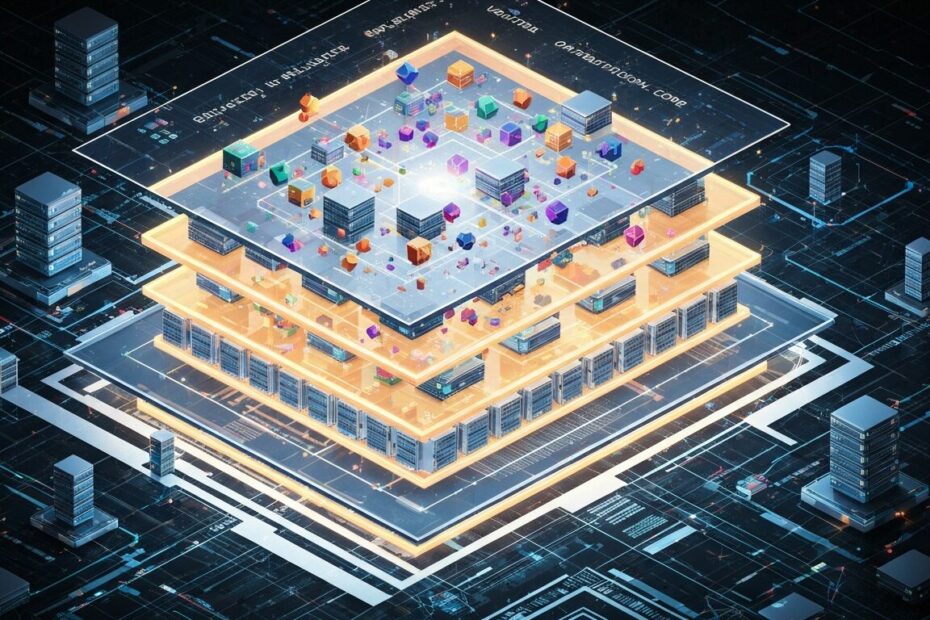
Qdrant Vector Database Adds Tiered Multitenancy: A Game-Changer for Smarter AI
Imagine you’re running a busy online store, and your website’s search function is like a cluttered attic—everything’s there, but finding the right item takes forever. What if there was a way to organize it all so searches are lightning-fast, no matter how many customers are browsing at once? That’s where the latest update from Qdrant comes in. This vector database just added something called “tiered multitenancy,” and it’s making waves in the world of AI and data management. But why should you care? In our daily lives, from shopping apps to personalized recommendations on streaming services, this tech could mean quicker, more reliable experiences that save you time and frustration. Tools like Genspark already help by summarizing web searches efficiently—imagine that speed scaled up for entire databases!
John: Hey folks, John here, your battle-hardened tech lead who’s seen enough hype cycles to know when something’s actually useful. Vector databases? They’re like the secret sauce behind modern AI, storing data as “vectors” (think of them as numerical fingerprints of information) for super-fast similarity searches. But this new tiered multitenancy in Qdrant? It’s not just buzz—it’s engineering smarts solving real scalability headaches.
Lila: And I’m Lila, making sure we keep it simple. If you’re new to this, don’t worry—we’ll break it down step by step, like explaining a recipe to a friend who’s never cooked before.
The “Before” State: Why Databases Used to Feel Like a Crowded Party
Before updates like this, managing large-scale data in vector databases was a bit like hosting a massive party in a small house. Everyone’s crammed in, and if one group gets rowdy (say, a big company with tons of data queries), it disrupts everyone else—slowing down searches and causing “noisy neighbor” problems. Small users might wait forever for results, while big ones hog all the resources. This made it tough for businesses to scale without splitting everything into separate, expensive setups. Creating reports or presentations on such data? It was a hassle, often requiring manual tweaks. That’s where tools like Gamma come in handy today, letting you whip up docs quickly, but imagine if the underlying data was already optimized!
John: Exactly. In the old days, you’d have to choose between isolating tenants (like different users or apps) for performance, which cost a fortune in hardware, or mixing them and dealing with slowdowns. Qdrant, built in Rust for that rock-solid performance, was already a beast, but this update? It’s like adding turbo boosters.
How It Works: Explaining It Like You’re 12
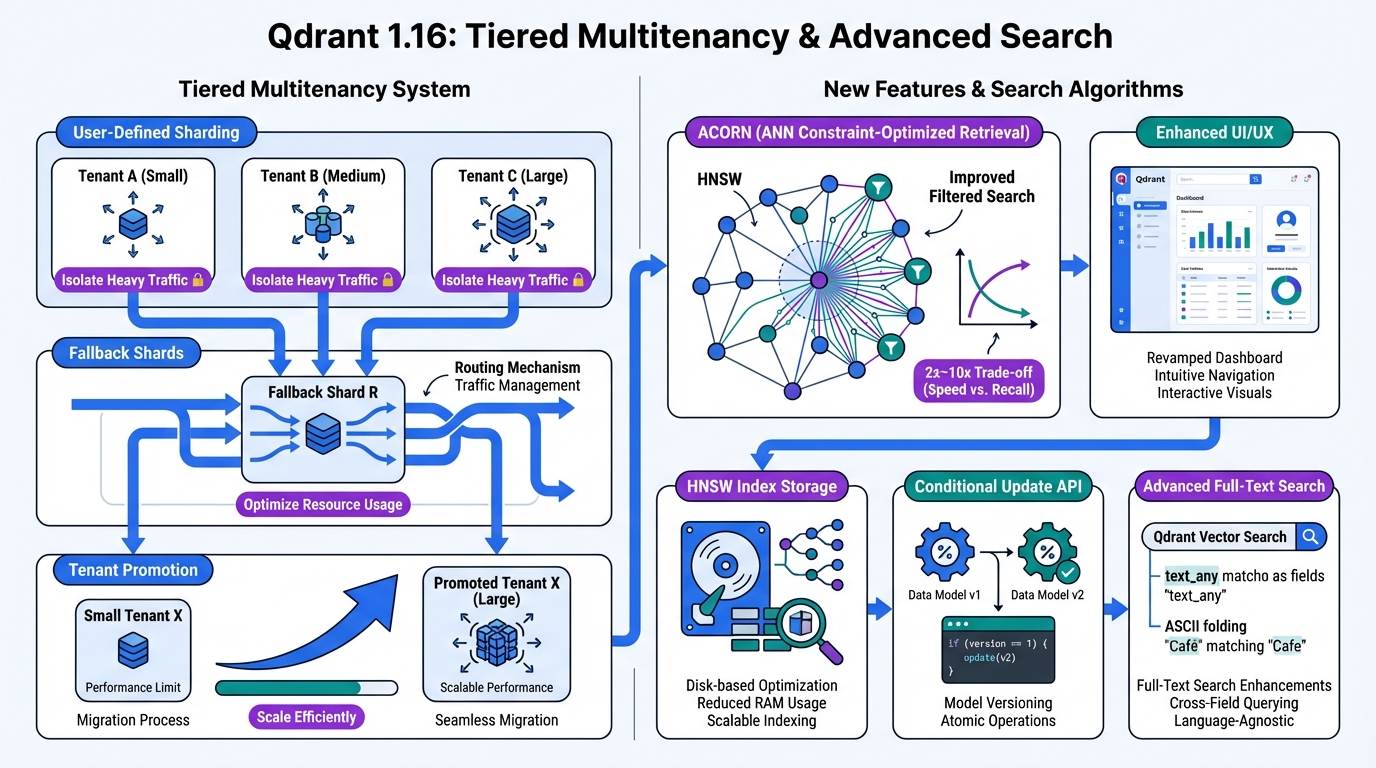
Okay, kiddo, imagine a huge apartment building where lots of families live. In a regular building, if one family throws a loud party, it bothers everyone. Tiered multitenancy is like redesigning the building with special floors: small families share cozy, efficient spaces, but if one family grows big and needs more room, you “promote” them to their own private floor without kicking anyone out. This keeps the whole building running smoothly—no noise, no fights over the elevator.
In Qdrant terms, a vector database stores data as vectors (those numerical fingerprints we mentioned) for quick searches, like finding similar images or recommendations. Tiered multitenancy lets you mix small and large “tenants” (users or apps) in one collection. Small ones share “shards” (like shared rooms), but big ones get dedicated shards. It’s all automatic, improving speed and efficiency while cutting costs on hardware.
Lila: Think of it as a library: Normally, all books are in one big room, and popular sections get crowded. With tiers, popular books get their own speedy section, but everything’s still connected.
John: From an engineering view, Qdrant uses custom sharding—dividing data across nodes—and payload filters for isolation. It’s open-source, so you can tweak it with tools like LangChain for AI pipelines. No more noisy neighbors; promote heavy users to isolated shards without downtime.
Real-World Examples: How You Can Use This in Everyday Life
Let’s get practical. This isn’t just for tech giants; it trickles down to apps you use daily.
First, picture an e-commerce app. With tiered multitenancy, small shops share resources cheaply, but if your store booms, Qdrant automatically gives you dedicated space for faster product searches. Your customers find items quicker, boosting sales. If you’re creating promo videos for your shop, check out Revid.ai to turn blog posts into quick clips.
Second, in education apps. Students learning coding or any subject could use AI tutors that search vast knowledge bases. Qdrant ensures smooth performance even with thousands of users. For interactive learning, tools like Nolang let you chat with an AI to grasp concepts without lag.
Third, healthcare apps for personalized advice. Doctors or patients querying symptom databases get instant, accurate matches. Small clinics share tiers, while big hospitals get isolated power, ensuring privacy and reliability.
Aha! Moment: This means AI apps feel snappier, like upgrading from a bike to a sports car.
Lila: See? It’s about making tech work for us, not the other way around.
Comparison: Old Way vs. New Way
| Aspect | Old Way (Traditional Multitenancy) | New Way (Qdrant’s Tiered Multitenancy) |
|---|---|---|
| Performance for Mixed Users | Slowdowns from “noisy neighbors”—big users hog resources | Isolates heavy users in dedicated shards for consistent speed |
| Cost Efficiency | High—often need separate databases for each tenant | Lower—mix tenants in one collection, promote as needed |
| Scalability | Limited; hard to handle growth without reconfiguration | Easy; automatic promotion to dedicated resources |
| Ease of Use | Complex management for admins | Simple; built-in tools for hybrid cloud deployment |
John: As you can see, it’s a clear win. Qdrant’s open-source nature means you can deploy it with Hugging Face models for AI tasks—try fine-tuning Llama-3-8B for custom searches.
Conclusion: Time to Dive In
In summary, Qdrant’s tiered multitenancy is like giving your data a smart upgrade—faster, cheaper, and more flexible for everyone from students to businesses. It matters because it powers the AI in our apps, making life easier. Why not explore it? Start by checking out Qdrant’s docs or integrating it into a small project. For automating workflows around this, Make.com can connect your apps seamlessly.
Lila: Remember, tech like this is here to help—give it a try and see the difference!

👨💻 Author: SnowJon (Web3 & AI Practitioner / Investor)
A researcher who leverages knowledge gained from the University of Tokyo Blockchain Innovation Program to share practical insights on Web3 and AI technologies. While working as a salaried professional, he operates 8 blog media outlets, 9 YouTube channels, and over 10 social media accounts, while actively investing in cryptocurrency and AI projects.
His motto is to translate complex technologies into forms that anyone can use, fusing academic knowledge with practical experience.
*This article utilizes AI for drafting and structuring, but all technical verification and final editing are performed by the human author.
🛑 Disclaimer
This article contains affiliate links. Tools mentioned are based on current information. Use at your own discretion.
▼ Recommended AI Tools for Beginners
- 🔍 Genspark An AI agent that saves you research time by summarizing search results.
- 📊 Gamma Create beautiful presentations and docs in seconds just by typing.
- 🎥 Revid.ai Turn your text or blogs into viral short videos instantly.
- 👨💻 Nolang Learn coding or any topic by chatting with an AI tutor.
- ⚙️ Make.com Automate boring tasks by connecting your favorite apps.
References & Further Reading
- Qdrant vector database adds tiered multitenancy | InfoWorld
- Qdrant Introduces Tiered Multitenancy to Eliminate Noisy Neighbor Problems in Vector Search
- Qdrant Adds Ability to Segment AI Workloads to Open Source Vector Search Engine – Techstrong.ai
- What is a Vector Database? — Qdrant | by Qdrant on Medium
- Best Practices for Massive-Scale Deployments: Multitenancy and Custom Sharding – DEV Community