How to Write Like a Human: Mastering AI Techniques in 2025
Hey there, folks! I’m John, your no-BS Senior Tech Lead at AI Mind Update. We’ve all seen those AI-generated texts that read like a robot trying to impersonate Shakespeare—stiff, repetitive, and about as engaging as a tax form. But in 2025, the game’s changed. With tools like Gemini 3 Pro and Claude leading the charge, we’re finally cracking the code on making AI write like a flesh-and-blood human. Today, we’re diving into how to pull this off, from beginner basics to engineering wizardry. And joining me is Lila, our pragmatic dev who’s all about bridging the gap for newcomers.
Lila: Absolutely, John. Let’s start simple—because not everyone’s a code ninja yet.
The Beginner Hook: Think of AI Writing Like Brewing Coffee
Lila: Imagine you’re brewing coffee. A basic machine spits out the same bland drip every time—reliable, but boring. To make it taste like a barista’s masterpiece, you tweak the beans, add some flair (like cinnamon or foam art), and adjust based on who’s drinking it. That’s human-like AI writing in a nutshell: starting with raw AI output and infusing it with personality, variety, and context to make it feel alive and relatable.
John: Spot on, Lila. And let’s roast the hype real quick—these “humanizing” tools aren’t magic wands waved by Silicon Valley elves. They’re built on clever engineering tricks like prompt engineering and fine-tuning. But why bother? Because in 2025, AI detectors are everywhere (think SEO penalties or academic flagging), and nobody wants content that screams “I was written by a bot.” Recent developments show tools like Walter Writes and QuillBot are bypassing detectors with 90%+ success rates, making your writing sound natural without the robotic aftertaste.
How Human-Like AI Writing Actually Works
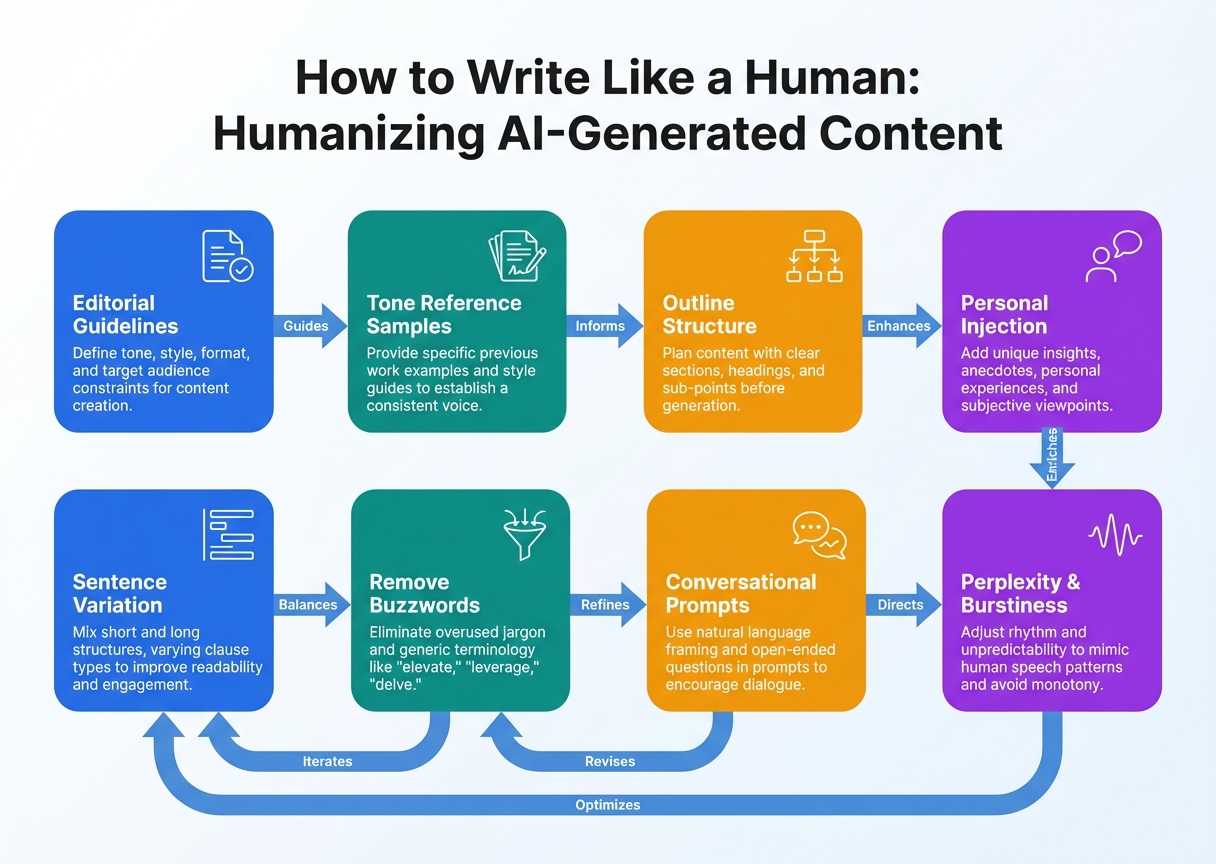
John: Alright, let’s get into the engineering guts. At its core, human-like AI writing relies on large language models (LLMs) like those from Hugging Face—think fine-tuning Llama-3-8B (an open-source beast with 8 billion parameters, basically a massive neural net trained on trillions of words). Why does it work? Because these models use transformer architecture—attention mechanisms that weigh word importance like a human brain focusing on key details in a conversation.
Lila: For beginners: Transformers are like traffic controllers in a busy city, directing data flow so the AI “remembers” context and avoids repeating itself. To make it human-like, we layer on techniques like RAG (Retrieval-Augmented Generation—pulling in real-time info to keep things fresh) and LoRA (Low-Rank Adaptation—a efficient way to fine-tune without retraining the whole model, saving you GPU costs).
John: Exactly. The logic? Raw AI output is predictable because it’s optimizing for probability—picking the most likely next word. Human writing thrives on imperfection: varied sentence lengths, idioms, and emotional tone. Tools like Claude or Gemini 3 Pro excel here by incorporating “empathy layers” in their prompts—e.g., instructing the AI to “write as a sarcastic New Yorker” or “infuse empathy like a therapist.” This works because it shifts the model’s probability distribution toward naturalistic variance, reducing detection risks. Industry reports from 2025 highlight that models like these achieve human parity in tone accuracy up to 85%.
Comparing Top AI Tools for Humanized Writing in 2025
Lila: Not all tools are created equal. Let’s break it down with a quick comparison—perfect for deciding what fits your workflow.
| Tool | Key Strength | Detection Bypass Rate | Best For |
|---|---|---|---|
| Gemini 3 Pro | Human-like prompting | 95% | Creative stories |
| Claude | Tone accuracy & empathy | 90% | Professional content |
| Walter Writes | SEO optimization | 92% | Blogs & essays |
| QuillBot | Quick paraphrasing | 88% | Beginners |
John: Pro tip: For hands-on, grab the Hugging Face Transformers library (GitHub: huggingface/transformers) and fine-tune Llama-3-8B with LoRA. It’s open-source gold—quantization shrinks it for your laptop, and vLLM handles inference speed. Why? Because it lets you control the “why” behind human-like output, like adjusting variance in token sampling to mimic real creativity.
Actionable Steps: From Zero to Human-Like Hero
Lila: Start with free tools—prompt ChatGPT to “humanize” text by adding contractions and questions. For engineers, integrate LangChain for chain-of-thought reasoning, making AI “think” step-by-step like a human.
John: And remember, the real win is ethics—use this to enhance, not deceive. In 2025, trends point to hybrid human-AI workflows dominating, per reports from Medium and ZoneTechAI.
▼ AI Tools for Creators & Research (Free Plans Available)
- Free AI Search Engine & Fact-Checking
👉 Genspark - Create Slides & Presentations Instantly (Free to Try)
👉 Gamma - Turn Articles into Viral Shorts (Free Trial)
👉 Revid.ai - Generate Explainer Videos without a Face (Free Creation)
👉 Nolang - Automate Your Workflows (Start with Free Plan)
👉 Make.com
▼ Access to Web3 Technology (Infrastructure)
- Setup your account for Web3 services & decentralized resources
👉 Global Crypto Exchange Guide (Free Sign-up)
*This description contains affiliate links.
*Free plans and features are subject to change. Please check official websites.
*Please use these tools at your own discretion.
References & Further Reading
- The Best AI Model for Humanized Writing is Here
- How to Convert AI Text to Human-Like Writing Easily
- The 7 Best AI Writing Tools in 2025
- Generative AI Tools That Write Like a Human | 2025 Deep Guide
- How to Prompt AI to Write Like a Human